Anti-Theft Alarm Detector Mockup: Visualizing Retail Security and Brand Campaigns
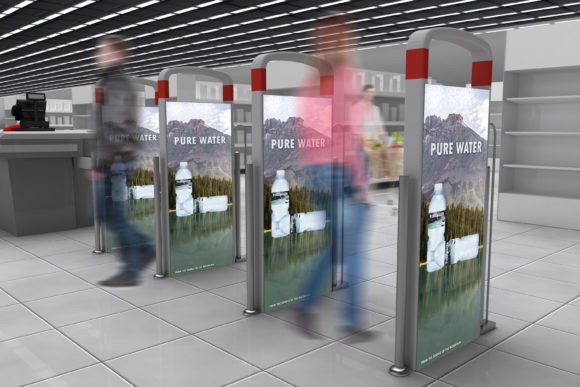
When designing for retail environments, the gap between a digital concept and physical reality can be difficult to bridge. Clients often struggle to visualize how security hardware or promotional signage will actually look in a busy supermarket aisle or at a mall entrance. This is where an Anti-Theft Alarm Detector Mockup becomes an essential tool for designers and marketers. Rather than presenting a flat graphic on a white background, this resource places your design directly onto a photorealistic representation of retail infrastructure. It transforms abstract ideas into tangible previews, allowing stakeholders to evaluate aesthetics, readability, and environmental integration before a single dollar is spent on manufacturing or installation.
The primary value of this mockup lies in its specific context. It is not a generic device; it is situated at the entrance of a shopping center or supermarket, which is exactly where these decisions are made in the real world. For creative professionals working on enhanced brand campaigns or product launch simulations, seeing the artwork within the correct architectural and lighting context eliminates guesswork. You aren't just showing a logo or a warning label; you are demonstrating how that visual element coexists with floor tiles, overhead lighting, and customer traffic flow.
Real-World Applications for Retail and Security Design
Different professionals approach retail visualization with distinct goals. Understanding these varied use cases helps maximize the utility of the Anti-Theft Alarm Detector Mockup across multiple disciplines.
Retail Loss Prevention and Hardware Manufacturers
For companies that manufacture Electronic Article Surveillance (EAS) systems, the industrial design of the pedestal is only half the battle. The branding, status lights, and instructional decals must be legible and professional. Product designers use this mockup to test how different color schemes interact with standard retail flooring and lighting. If a new alarm detector features a sleek matte black finish, the mockup reveals whether it looks sophisticated or disappears too much against dark store tiles. Conversely, if the goal is high visibility for theft deterrence, the simulation shows whether the contrast is sufficient to catch a shopper's eye without looking aggressive.
Marketing Agencies and Brand Managers
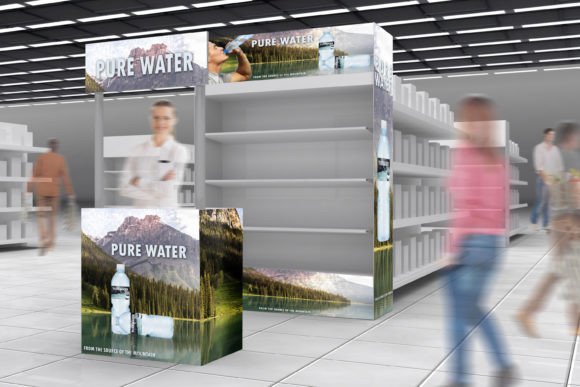
Security gates at store entrances are prime real estate for advertising, yet they are often overlooked in campaign planning. Marketing teams utilize this mockup to simulate "enhanced brand campaigns" where promotional messaging is integrated directly onto security hardware. Imagine launching a new beverage line; placing the campaign artwork on the alarm detector mockup allows the team to assess sightlines from both inside and outside the store. It answers critical questions: Is the text readable from five feet away? Does the brand color clash with the store’s existing palette? This prevents costly reprints caused by poor environmental fit.
Supermarket Chains and Facility Managers
Large grocery chains and malls often have strict vendor guidelines regarding signage and equipment appearance. Facility managers and procurement officers use these visualizations during the approval process. Before signing a contract for hundreds of units across multiple locations, they need assurance that the new anti-theft alarm detectors align with corporate identity standards. The high-resolution output serves as documentation for internal presentations, helping non-designers understand why a specific model or decal placement was chosen over another.
Educational and Portfolio Use
Design students and freelancers building portfolios benefit significantly from niche-specific mockups. A portfolio filled with generic business cards and t-shirts fails to demonstrate specialized problem-solving skills. Including a realistic Anti-Theft Alarm Detector Mockup project signals to potential employers that the designer understands retail environments, spatial awareness, and industrial application. It moves the conversation from "I can make graphics" to "I can design solutions for complex physical spaces."
Technical Features That Drive Practical Outcomes
The effectiveness of a mockup depends entirely on its technical execution. This Anti-Theft Alarm Detector Mockup is built with specific features that translate directly to workflow efficiency and presentation quality.
- Smart Object Integration: The core functionality relies on Photoshop Smart Objects. This means you do not need to manually warp or distort your artwork to fit the perspective of the alarm detector. By double-clicking the smart object layer, inserting your design, and saving, the system automatically applies the correct angle, curvature, and texture mapping. This reduces editing time from hours to minutes while ensuring mathematical accuracy in the perspective.
- High Resolution (3000×2000 px): Retail presentations often require large-format printing or high-definition screen displays. At 3000x2000 pixels, this file provides enough density for crisp detail even when zoomed in. Stakeholders can inspect fine print, regulatory warnings, or subtle texture interactions without pixelation undermining the professionalism of the pitch.
- Adjustable Lighting and Photo Filters: No two stores have identical lighting. A design that pops under cool LED warehouse lighting might look muddy under warm incandescent bulbs. The included adjustment layers for light, contrast, and photo filters allow users to match the mockup to specific client environments. This customization ensures the preview reflects the actual deployment site rather than a sterile studio ideal.
- Organized Layer Structure: Time is money in agency work. All layers in this PSD are named and grouped logically. When working under tight deadlines for a product launch simulation, you won't waste time hunting for the correct shadow overlay or reflection mask. This organizational clarity also makes the file accessible to junior designers or collaborators who may need to make quick adjustments.
Critical Considerations Before Implementation
While this mockup is a powerful asset, users should approach it with practical awareness to avoid common pitfalls.
Software Compatibility: You must have at least Adobe Photoshop CS5 to edit this file. While CS5 supports Smart Objects, newer versions of Photoshop offer improved rendering performance and additional filter options. Users on older software should verify their version supports all adjustment layer types included in the file. Those using alternative software like GIMP or Affinity Photo should test compatibility first, as Smart Object behavior can vary significantly outside the Adobe ecosystem.
Contextual Accuracy: Always consider whether the mockup’s environment matches your target venue. If you are designing for a luxury boutique but the mockup depicts a big-box supermarket aesthetic, the disconnect may confuse clients. Use the lighting and contrast adjustments to mitigate this, but recognize that architectural details like floor type and ceiling height are fixed elements of the base image.
Print vs. Digital Reality: Remember that this is a simulation tool, not a production proof. Colors displayed on screen through a photo filter may differ from actual vinyl prints or plastic molding colors. Always supplement mockup presentations with physical material samples or Pantone references when finalizing manufacturing specifications. The mockup sells the concept; physical proofs validate the execution.
Licensing and Usage Rights: Verify the license terms for your intended use. Personal portfolio projects typically have different requirements than commercial client work or resale applications. Ensuring proper licensing protects both the designer and the end client from legal complications down the road.
Enhancing Client Communication Through Visualization
Ultimately, the Anti-Theft Alarm Detector Mockup serves as a communication bridge. In retail design, miscommunication is expensive. A client who approves a flat PDF but rejects the installed product creates waste, delays, and damaged relationships. By investing time in creating accurate, context-rich simulations, designers de-risk the approval process.
This tool empowers creators to guide clients toward better decisions. Instead of asking "Do you like this design?", you can ask "Does this design work in your store?" The shift from subjective preference to objective evaluation changes the entire dynamic of the feedback loop. Whether you are launching a new security product, rolling out a seasonal marketing campaign, or updating loss prevention infrastructure, seeing the design in situ is the difference between hoping it works and knowing it will.
For freelancers and agencies alike, mastering these specialized visualization techniques builds credibility. It demonstrates attention to detail and respect for the client's operational reality. When you present a polished, environmentally accurate mockup, you aren't just delivering artwork—you're delivering confidence. That confidence is what turns one-off projects into long-term partnerships in the competitive retail design space.