Mastering Minimalist Corporate Letterhead Design: A Guide to Professional Branding
In the digital age, where emails and instant messaging dominate business communication, the art of the formal letterhead might seem antiquated to some. However, for professionals in education, corporate sectors, and creative industries, a well-designed letterhead remains a cornerstone of brand identity. It is more than just a sheet of paper with a logo; it is a tangible representation of your organization’s credibility, attention to detail, and professional standards. Understanding how to design or select a minimal, corporate letterhead template is essential for anyone looking to elevate their business correspondence.
The Significance of Professional Stationery in Modern Business
Before diving into technical specifications, it is crucial to understand why letterhead design matters. When a client, student, or partner receives a physical document or a high-quality PDF on official stationery, it signals legitimacy. In an era of digital noise, a clean, eye-catchy professional work stands out because it implies that the sender has taken the time to present themselves properly.
For the education industry, letterheads convey academic rigor and institutional stability. For corporate entities, they suggest organizational structure and reliability. Even for freelancers and small businesses, a custom letterhead bridges the gap between amateur and established professional. The goal is not merely decoration; it is about creating a cohesive visual language that reinforces trust every time your name appears on a page.
The Power of Minimalism in Corporate Design
When we discuss a "minimal and corporate look," we are referring to a specific design philosophy that prioritizes clarity over clutter. A common misunderstanding among beginners is that more design elements equal more professionalism. In reality, the opposite is often true. Effective corporate stationery relies on negative space, balanced typography, and strategic color usage.
Why Less is More
A minimalist approach ensures that the content of the letter takes center stage. The design should frame the message, not compete with it. This style is particularly suited for versatile use across different industries because it avoids overly trendy graphics that might date quickly or alienate conservative clients. By focusing on clean lines and ample whitespace, you create a timeless aesthetic that serves all purposes, from legal notices to welcome letters for new students.
Versatility Across Industries
One of the greatest advantages of a minimal corporate template is its adaptability. While specific branding colors will change, the underlying structure remains effective whether you are running a law firm, a university department, or a tech startup. This versatility makes investing in a high-quality, editable template a smart decision. You can customize it to fit your needs without having to reinvent the wheel, ensuring consistency across your entire suite of business documents.
Technical Excellence: What Makes a Template Print-Ready
Designing for print requires a different mindset than designing for screens. Many people assume that a file looking good on a monitor will translate perfectly to paper, but this is a frequent pitfall. To achieve a truly professional result, one must adhere to strict technical standards. When evaluating or creating a letterhead, several non-negotiable specifications ensure the final product looks crisp and authoritative.
- Resolution: Always aim for 300 DPI (Dots Per Inch). Anything lower may appear pixelated or blurry when printed, instantly undermining the professional look you are trying to achieve.
- Color Mode: Screens use RGB (Red, Green, Blue), but printers use CMYK (Cyan, Magenta, Yellow, Key/Black). Designing in CMYK ensures that the colors you see in your software match the ink laid down on paper. A 5-color setup often includes standard CMYK plus a spot color for precise brand matching.
- Bleed Areas: Professional printing rarely stops exactly at the edge of the paper. A standard bleed of 0.125 inches ensures that if the cutting blade shifts slightly, there are no unprinted white edges. An A4 size of 8.27×11.69 inches with bleed accounts for this necessary margin.
- File Formats: Vector-based formats like Adobe Illustrator EPS are superior for stationery because they scale infinitely without losing quality. Having PDF and JPG exports included allows for easy sharing and digital use.
Customization: Making the Template Your Own
The true value of a pre-designed template lies in its editability. You do not need to be a graphic design expert to achieve professional results, provided the file is well-organized. Modern templates created in the latest versions of software, such as Adobe Illustrator CC 2022, utilize layers and smart objects to streamline the customization process.
Simplifying the Editing Process
A high-quality template should be intuitive. The workflow should be as simple as adding your logo and adjusting the color palette to match your brand guidelines. Well-organized layers mean you won't accidentally delete background elements while trying to update your address. This ease of use is vital for busy professionals who need to get back to work rather than spending hours troubleshooting design files.
Typography and Font Management
Fonts play a massive role in the "feel" of a letterhead. Premium templates often include font information or even free fonts to ensure you can replicate the designer's intended look. Typography should be legible and aligned with your brand voice—serif fonts for traditional authority, sans-serif for modern approachability. Ensuring you have access to the correct typefaces prevents the frustration of broken links or substituted fonts that ruin the layout.
Visualizing the Result: The Role of 3D Mockups
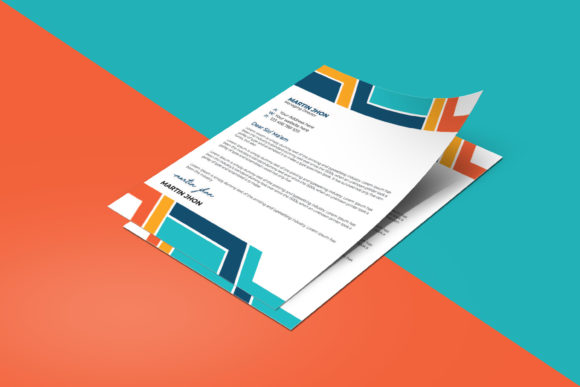
It can be difficult to judge a flat design file. This is why included 3D mockups are an invaluable resource. They allow you to visualize how the letterhead will look in a real-world setting—perhaps resting on a desk, clipped to a board, or inside an envelope. This visualization helps in making final adjustments to contrast and spacing before committing to a print run. It bridges the gap between abstract design and tangible reality, giving you confidence in your final product.
Support and Long-Term Value
When acquiring design assets, the transaction shouldn't end at download. Technical issues arise, software updates happen, and branding needs evolve. Access to lifetime support transforms a simple file purchase into a long-term partnership. Whether you need help using the file or require special customizing, knowing that the creator is available via their profile adds a layer of security to your investment.
Furthermore, supporting creators through ratings and feedback fosters a community of quality. If a template has saved you time and elevated your brand, leaving a 5-star rating helps other professionals find reliable resources. It is a small gesture that sustains the ecosystem of high-quality design assets.
Building a Broader Understanding of Brand Consistency
Ultimately, designing or selecting a letterhead is an exercise in brand discipline. It forces you to define your colors, choose your typefaces, and establish a tone of voice. These decisions ripple outward to your website, social media, and packaging. By starting with a solid foundation—a clean, print-ready, editable letterhead—you build a brand identity that is resilient and recognizable.
Whether you are in education seeking to inspire confidence in parents and students, or in business aiming to impress stakeholders, the principles remain the same. Clarity, technical precision, and aesthetic restraint combine to create tools that communicate effectively. By understanding these elements, you move beyond simply "making a document" to crafting a strategic asset that serves your organization for years to come.
If you are ready to elevate your correspondence, ensure you choose resources that offer high resolution, proper bleed settings, and comprehensive support. Investing in quality design is investing in your professional reputation.