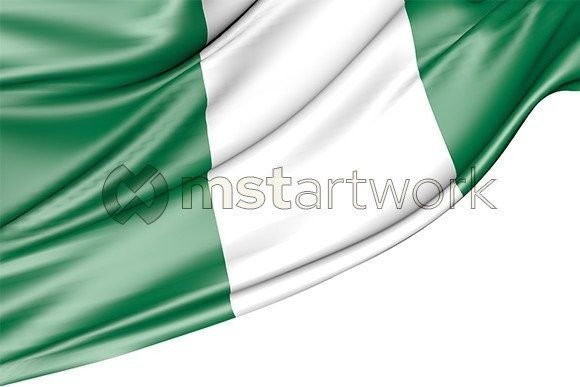
Nigeria Flag Isolated on White: 3D Design Asset
When sourcing visual elements for projects centered around Nigerian heritage, national pride, or cultural events, finding high-quality imagery that requires zero post-production cleanup is a significant advantage. The Nigeria Flag Isolated on White provides exactly this utility. This specific asset is not merely a flat digital reproduction; it is a detailed 3D illustration that captures the texture, fold, and depth of fabric while maintaining a pristine white background. For designers, marketers, and content creators working within the 20–50 demographic, this distinction matters. It bridges the gap between generic stock photography and custom-rendered motion graphics, offering a premium aesthetic that elevates brand identity without demanding hours of masking or color correction.
The visual personality of this asset leans toward modern professionalism mixed with patriotic reverence. Unlike flat vector icons which can sometimes feel sterile or overly corporate, the 3D rendering introduces a tactile quality. You can perceive the weight of the material and the interplay of light across the green and white bands. This realism makes the Nigeria Flag Isolated on White particularly effective for editorial design and high-end packaging where texture communicates value. The isolation on a pure white background ensures that the flag remains the focal point, allowing it to integrate seamlessly into diverse layouts ranging from minimalist web headers to vibrant social media campaigns. It respects the gravity of the symbol while providing the technical flexibility required in contemporary digital workflows.
Versatile Applications Across Digital and Print Media
The true value of this 3D illustration lies in its adaptability across different mediums. With a resolution of 3840×2160px, the file format .jpg offers sufficient pixel density for large-format printing while remaining optimized for screen display. This dual-purpose capability is essential for entrepreneurs and small business owners who need consistent branding across touchpoints without purchasing multiple asset variations.
For digital marketers and social media managers, this asset serves as an immediate engagement booster. When creating content for Independence Day, cultural festivals, or diaspora-focused campaigns, the 3D style stands out in crowded feeds better than standard flat graphics. It works exceptionally well as a profile overlay, a story sticker, or a central element in carousel posts. Because it is already isolated, you can drag and drop it directly onto colored backgrounds, gradient meshes, or photographic composites without worrying about jagged edges or halo effects. This streamlines the production pipeline for agencies managing multiple client accounts.
In the realm of print-on-demand and merchandise, the high resolution supports crisp reproduction on physical products. Designers creating t-shirts, mugs, and stickers will appreciate that the 3D shading translates well to direct-to-garment printing and heat transfer paper. The depth prevents the flag from looking like a cheap decal on fabric; instead, it mimics the appearance of an embroidered patch or woven label. This same principle applies to paper products like greeting cards, scrapbooking kits, and posters. For those designing baby clothes or kids' apparel, the soft rendering of the fabric folds avoids harsh lines, making the national symbol approachable and gentle for younger audiences while retaining its official dignity.
Enhancing Visual Hierarchy and Brand Perception
Typography and imagery must work in concert to establish effective visual hierarchy. While the Nigeria Flag Isolated on White is a graphical element rather than a typeface, it influences typographic choices significantly. Its bold, saturated colors and three-dimensional form carry substantial visual weight. When pairing this asset with text, designers should consider using clean sans serif fonts or modern display typefaces that can hold their own against the graphic's intensity. A delicate script font might get lost beside the rendered flag, whereas a strong geometric sans serif creates a balanced, authoritative composition suitable for government communications or corporate CSR reports.
Brand perception is heavily influenced by the quality of visual assets. Using low-resolution or poorly cropped flags can inadvertently signal a lack of attention to detail or respect for the subject matter. By utilizing a premium 3D illustration, brands communicate professionalism and cultural competence. This is particularly relevant for international companies entering the Nigerian market or local businesses aiming to modernize their legacy image. The consistency provided by a single, high-quality master file ensures that the flag looks identical on a website hero banner, a printed brochure, and a mobile app icon, reinforcing brand recognition and trust.
Furthermore, the emotional resonance of the asset cannot be overstated. In marketing, connection drives conversion. A realistic, textured flag evokes sensory memories and pride more effectively than an abstract representation. For publishers creating educational materials or historical retrospectives, this visual accuracy supports the narrative. It grounds the content in reality, making abstract concepts of nationhood and identity tangible for the reader. This emotional anchoring is what transforms a simple graphic into a powerful storytelling device.
Practical Integration and Technical Considerations
Integrating the Nigeria Flag Isolated on White into your workflow requires some practical foresight to maximize its potential. Although the JPG format is universally compatible, users should be mindful of compression artifacts when resizing. Always scale down from the original 3840×2160px source rather than upscaling smaller versions to maintain edge sharpness. For web use, consider converting the file to WebP or AVIF to reduce load times while preserving the 3D detail, as full-resolution JPGs can impact page speed scores.
When evaluating project fit, consider the surrounding color palette. The vivid greens of the Nigerian flag are dominant. If your brand guidelines include conflicting greens, you may need to adjust the saturation or brightness of either the flag or the background to prevent visual vibration. Testing font pairings is equally important. Place your chosen typeface next to the flag at various sizes to ensure legibility. The 3D nature of the flag means it has irregular edges; ensure text does not collide with the fabric folds. Adequate negative space around the asset allows it to breathe and maintains a professional layout.
- Check Licensing: Always verify whether the asset license covers commercial merchandise if you plan to sell t-shirts or mugs. Personal use licenses often exclude retail products.
- Color Management: For print projects, convert the RGB JPG to CMYK and perform a soft proof to ensure the iconic green reproduces accurately on your specific paper stock or fabric.
- Contextual Appropriateness: Ensure the 3D style matches the tone of your project. While versatile, hyper-realistic renders may clash with hand-drawn or vintage aesthetic themes.
- File Organization: Keep the original high-res file archived separately from edited versions to prevent quality degradation over successive saves.
Ultimately, this design asset represents a convergence of cultural significance and technical convenience. Whether you are a hobbyist crafting a family reunion invitation or a brand strategist launching a nationwide campaign, the Nigeria Flag Isolated on White provides a reliable, high-impact foundation. It removes the friction of asset creation, allowing creatives to focus on message and composition. By treating this 3D illustration as a core component of your design system rather than an afterthought, you ensure that every output honors the symbol it represents while meeting the rigorous demands of modern visual communication.