Evaluating Egypt Flag Isolated on White for Professional and Creative Projects
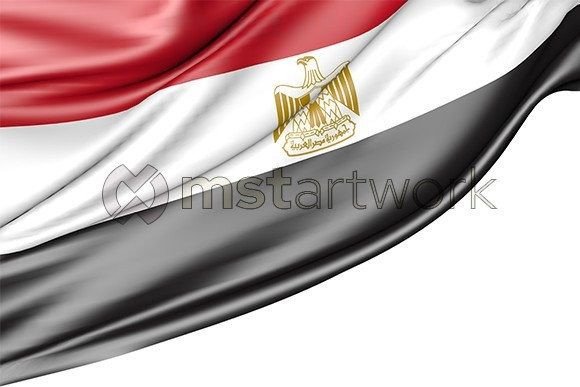
When sourcing visual assets for digital or print media, the specific technical presentation of a national symbol matters as much as its cultural accuracy. An Egypt Flag Isolated on White is not merely a picture of a tricolor banner; it is a functional design element engineered for versatility. This specific asset type features the red, white, and black horizontal bands with the Eagle of Saladin centered, rendered against a pure white backdrop without shadows, borders, or background noise. For designers, educators, content creators, and merchandisers, understanding the distinction between this isolated format and standard flag photography is essential for maintaining professional quality across various applications.
The primary value of an isolated flag lies in its compositional neutrality. Unlike photographs taken at embassies or sporting events, which include wind distortion, lighting gradients, and environmental clutter, an isolated illustration provides a controlled baseline. This control allows users to integrate the Egyptian flag seamlessly into complex layouts, whether for a corporate presentation slide, a social media graphic, or a heat transfer design for apparel. When evaluating resources for your next project, recognizing the technical advantages of this specific format helps prevent common design pitfalls associated with low-quality or improperly formatted imagery.
Distinguishing 3D Illustrations from Flat Vectors and Photography
A critical decision point when selecting an Egypt Flag Isolated on White Background, 3d Illustration versus other formats involves understanding the visual weight each style carries. While flat vector graphics are mathematically precise and infinitely scalable, they can sometimes appear sterile or overly bureaucratic in creative contexts. Conversely, photographic flags offer realism but often struggle with integration due to inconsistent lighting and difficult-to-remove backgrounds.
The 3D illustration format occupies a strategic middle ground that benefits many modern use cases:
- Depth and Texture: A 3D render simulates fabric folds, sheen, and subtle shadowing within the flag itself while keeping the external background pure white. This adds a tactile quality that feels premium on merchandise like mugs and t-shirts without requiring complex photo editing.
- Lighting Consistency: Because the lighting is digitally generated, it remains uniform. This makes it significantly easier to match the flag’s illumination to your existing website theme or presentation template compared to a photograph taken under natural sunlight.
- Clean Extraction: Even though the file is a JPG rather than a PNG with transparency, the high-contrast white isolation allows for near-instantaneous background removal using standard design software. This differs from photos where hair-like fraying or motion blur makes clean masking difficult.
However, tradeoffs exist. If you require absolute geometric precision for technical diagrams or large-format billboards where pixel density is paramount, a vector EPS or SVG might be superior. The 3D JPG format excels in raster-based environments where visual appeal and ease of use outweigh the need for infinite mathematical scaling.
Technical Specifications and Resolution Considerations
For professionals comparing assets, resolution is often the deciding factor between a usable resource and a liability. This specific Egypt Flag Isolated on White asset is provided at 3840×2160px (4K UHD). Understanding how this resolution translates to real-world application is vital for avoiding pixelation or unnecessary file bloat.
At 3840×2160px, the image supports high-density digital displays and moderate-sized print outputs effectively. For web and social media, this resolution is more than sufficient, allowing you to scale down for faster load times while retaining crisp edges on Retina or 4K monitors. For print-on-demand products, this size generally supports high-quality output up to approximately 13 inches wide at 300 DPI, making it ideal for standard t-shirts, greeting cards, stickers, and scrapbooking elements. It also works exceptionally well for baby clothes and kids' apparel, where the print area is naturally smaller.
Users should note that because this is a .jpg file, it utilizes lossy compression. While efficient for storage and web use, repeated editing and saving can degrade quality. Best practice dictates treating this master file as a source asset: open it once, perform necessary adjustments or background removals, and save your working files in non-destructive formats like PSD, TIFF, or AI. If your project requires printing larger than A3 size or demands lossless archival quality, you may need to supplement this JPG with a vector alternative or a higher-resolution TIFF.
Application-Specific Suitability Analysis
Determining whether this specific asset fits your workflow requires matching its characteristics to your end goal. The following breakdown compares the suitability of this Egypt Flag Isolated on White Background, 3d Illustration across common categories:
- Digital Presentations and Web Design: Highly suitable. The white background matches most slide masters and document backgrounds by default. The 3D aesthetic adds visual interest to otherwise flat slides, helping to distinguish cultural or geographical sections in educational or business decks.
- Print-on-Demand Merchandise: Suitable for small-to-medium items. The simulated fabric texture renders beautifully on ceramic mugs and cotton tees. However, ensure you remove the white background before printing on colored garments to avoid a white box appearing around the flag.
- Educational Materials and Worksheets: Excellent fit. The clean lines and accurate colors make it ideal for geography lessons, history handouts, and classroom posters. The lack of distracting background elements keeps student focus on the symbol itself.
- Large Format Signage: Conditional fit. At 3840px width, pushing beyond 13–15 inches of print width may reveal softness. For wall art or banners exceeding this size, verify acceptable quality through test prints or consider upscaling tools specifically designed for illustrations.
Color Accuracy and Cultural Representation
Beyond technical specs, the integrity of the representation is a non-negotiable evaluation metric. The Egyptian flag has undergone changes throughout history, and using an outdated or incorrect version can undermine credibility. This asset depicts the current official design adopted in 1984: equal horizontal bands of red (top), white (middle), and black (bottom), featuring the Eagle of Saladin in gold centered on the white band.
When comparing options, scrutinize the eagle’s detailing. In lower-quality assets, the emblem often appears muddy, misaligned, or stylized incorrectly. A high-quality 3D illustration should maintain clear definition of the eagle’s shield and talons even when scaled down for stickers or social media avatars. Additionally, color calibration matters. The red should be a distinct crimson rather than orange or maroon, and the black should be deep without losing detail in the 3D shading. Always cross-reference any downloaded asset against official government specifications if your project involves formal, diplomatic, or educational contexts where accuracy is paramount.
Workflow Integration and File Management
The practical utility of an Egypt Flag Isolated on White extends beyond its appearance to how it functions within established workflows. The JPG format offers universal compatibility—opening natively in everything from Microsoft PowerPoint and Canva to Adobe Photoshop and GIMP without codec issues. This accessibility makes it a pragmatic choice for teams with mixed software ecosystems or non-designers creating content independently.
For those planning extensive modifications, consider the implications of the white background. While "isolated" implies easy extraction, JPG compression artifacts can sometimes create faint halos along high-contrast edges. When removing the background for use on dark websites or colored t-shirts, utilize selection tools with edge refinement capabilities rather than simple magic wand selections. Taking an extra thirty seconds to refine the mask ensures the 3D shading blends naturally with your new background rather than looking pasted on.
File naming and organization also play a role in long-term usability. Since many users will download multiple flag assets, renaming this file to include key attributes (e.g., Egypt_Flag_3D_Isolated_4K.jpg) prevents confusion later. Maintaining a dedicated folder for verified, high-quality national symbols streamlines future projects, reducing time spent re-evaluating assets for every new presentation or product design.
Making the Final Selection Decision
Choosing the right flag asset ultimately depends on balancing convenience, quality, and context. This Egypt Flag Isolated on White Background, 3d Illustration at 3840×2160px represents a versatile solution for the majority of digital and small-format print needs. Its strengths lie in its ready-to-use composition, appealing dimensional rendering, and broad compatibility across creative and professional platforms.
It may not be the optimal choice if you require vector scalability for massive outdoor signage, need a transparent PNG out-of-the-box without editing, or require historically specific variants of the flag. In those cases, specialized vector libraries or historical archives would serve better. However, for adults creating social media content, designing merchandise, building educational resources, or enhancing presentations, this format offers an efficient balance of aesthetic quality and technical practicality. By understanding both its capabilities and its boundaries, you can integrate this asset confidently, ensuring your final output respects both the symbol’s significance and your project’s professional standards.