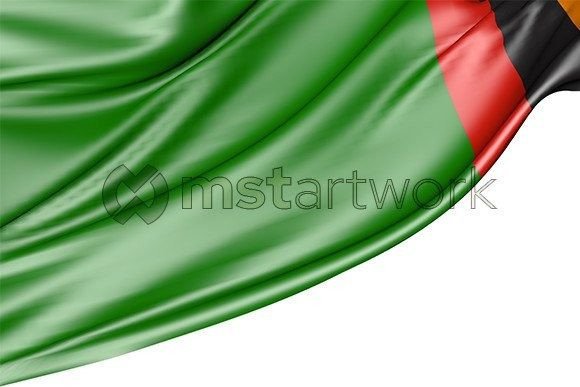
Evaluating the Zambia Flag Isolated on White Background for Digital and Print Projects
Selecting the correct visual asset for national representation requires careful consideration of format, resolution, and stylistic rendering. When searching for specific imagery such as a Zambia Flag Isolated on White Background, users are often navigating between standard flat vector graphics and more stylized three-dimensional representations. Understanding the distinct characteristics of a 3D illustration version of this asset is essential for determining whether it aligns with specific project requirements. This evaluation explores the technical specifications, appropriate use cases, and practical tradeoffs associated with utilizing a high-resolution JPG render of the Zambian flag for various commercial and personal applications.
Defining the Asset: 3D Illustration vs. Standard Vectors
The primary distinction of this specific asset is its presentation as a 3D illustration rather than a traditional flat graphic. A standard national flag is typically represented as a two-dimensional rectangle with solid color fields. In contrast, a Zambia Flag Isolated on White Background rendered in 3D incorporates simulated lighting, shadows, fabric texture, and depth. This stylistic choice transforms the symbol from a mere icon into a tangible object within a digital space. The isolation on a white background ensures that the flag remains the focal point, providing a clean canvas that facilitates easy integration into diverse layouts without visual clutter.
Technically, this file is provided in JPG format at a resolution of 3840×2160 pixels. This 4K UHD dimension is significant for evaluation purposes. Unlike vector files (SVG or EPS) which are mathematically scalable to infinite sizes, a raster JPG has a fixed pixel count. However, 3840×2160px offers substantial density for most digital displays and moderate-sized print projects. Users must understand that while the resolution is high, the JPG format does not support transparency. The "isolated" aspect refers to the visual composition against white, not an alpha channel. This technical reality dictates how the asset can be manipulated in post-production.
Strategic Applications and Use Case Fit
Determining whether this specific 3D rendition is the right choice depends heavily on the intended medium. The aesthetic qualities of a 3D illustration make it particularly strong for certain applications while less suitable for others.
Digital Presentations and Web Design
For slide decks, corporate websites, and digital reports, the 3D style offers a modern, polished appearance. Flat flags can sometimes appear sterile or overly bureaucratic in contemporary web design. The added depth and lighting effects of a 3D illustration create visual interest and can match the skeuomorphic or material design elements often found in modern UI/UX. The 3840×2160px resolution ensures crisp rendering on high-DPI monitors and retina displays, preventing the pixelation that occurs when stretching lower-resolution assets.
Social Media and Content Creation
Social media platforms prioritize engagement through visually striking content. A Zambia Flag Isolated on White Background in 3D serves as an effective thumbnail, profile accent, or story element. The white background allows creators to easily place the flag over colored gradients or branded templates using basic editing tools. For content related to Zambian tourism, cultural heritage, or national holidays, the realistic texture of a 3D render can evoke a stronger emotional response than a flat diagram.
Print-on-Demand and Merchandise
The specified resolution supports various print-on-demand products, though with size limitations. At 300 DPI (dots per inch), a 3840×2160px image yields a print size of approximately 12.8 inches by 7.2 inches. This makes the asset highly suitable for:
- Mugs and Drinkware: The dimensions provide ample coverage for standard ceramic mugs without loss of detail.
- Stickers and Decals: High pixel density ensures sharp edges and vibrant color reproduction on adhesive vinyl.
- Greeting Cards and Postcards: Standard card sizes (e.g., 5x7 or A6) fall well within the optimal resolution range.
- Baby and Kids Clothes: Smaller garment prints benefit from the high source resolution, maintaining clarity after heat transfer application.
However, for large-format posters or adult-sized t-shirts requiring full-bleed coverage, this specific JPG may reach its upper limit. Users planning large-scale apparel printing should verify if the 12.8-inch width meets their design specifications or if upscaling algorithms will be necessary.
Tradeoffs and Technical Considerations
While the 3D JPG format offers immediate usability, it presents specific tradeoffs compared to alternative file types. An objective evaluation must weigh these factors against project goals.
The Transparency Limitation
The most significant constraint of a JPG file is the lack of native transparency. Although the flag is isolated on white, placing it over a dark or colored background will result in a white box surrounding the image. To achieve true isolation, users must employ background removal tools or masking techniques in software like Photoshop, GIMP, or Canva. Because the flag is rendered in 3D with soft shadows and lighting gradients, automated background removers may struggle with edge detection compared to a flat vector. Manual refinement may be required to preserve the realistic shadow effects that give the 3D illustration its depth.
Stylistic Appropriateness
A 3D illustration is inherently stylized. It represents an artistic interpretation of the flag rather than a strict geometric reproduction. In contexts requiring absolute diplomatic accuracy, legal compliance, or official government documentation, a standardized vector specification is often mandated. The 3D version is best suited for decorative, educational, commercial, or celebratory contexts where aesthetic appeal takes precedence over rigid protocol. Users should consult relevant brand guidelines or governmental regulations if the flag is being used in an official capacity.
Color Management
National flags have specific Pantone or CMYK color values. A 3D render displayed in RGB (standard for JPGs) interprets these colors through simulated lighting. Highlights may appear washed out, and shadows may darken the green, red, black, and orange fields beyond their official specifications. For print projects where color accuracy is critical, users should expect to perform color correction after extracting the flag from the white background. The 3D effect, while visually pleasing, introduces variable color values that differ from flat official standards.
Decision-Making Framework for Buyers
To determine if this Zambia Flag Isolated on White Background asset is the correct investment, consider the following decision matrix:
- Assess the Output Size: If the final print area exceeds 12x7 inches, verify if the 3840×2160px resolution is sufficient or if AI upscaling is acceptable. For digital use, this resolution is generally future-proof.
- Evaluate Editing Capabilities: Do you have the skills or tools to remove a white background cleanly from a 3D object? If not, seek a PNG version with pre-existing transparency or a vector file.
- Determine Contextual Tone: Is the project formal/legal or creative/commercial? Choose the 3D illustration for the latter; choose official vectors for the former.
- Check Licensing: Ensure the specific license for this JPG covers the intended use, particularly for print-on-demand merchandise and commercial web deployment.
Conclusion
The Zambia Flag Isolated on White Background in 3D illustration format serves as a versatile mid-tier asset bridging the gap between casual clip art and professional vector graphics. Its 3840×2160px JPG specification makes it immediately deployable for high-definition digital content and small-to-medium print products like mugs, stickers, and children's apparel. While the lack of native transparency and the stylized nature of the render require additional processing and contextual awareness, the visual impact of the 3D treatment offers distinct advantages for modern design projects. By understanding these technical parameters and aesthetic implications, users can confidently integrate this asset into workflows that demand both national recognition and contemporary visual appeal.